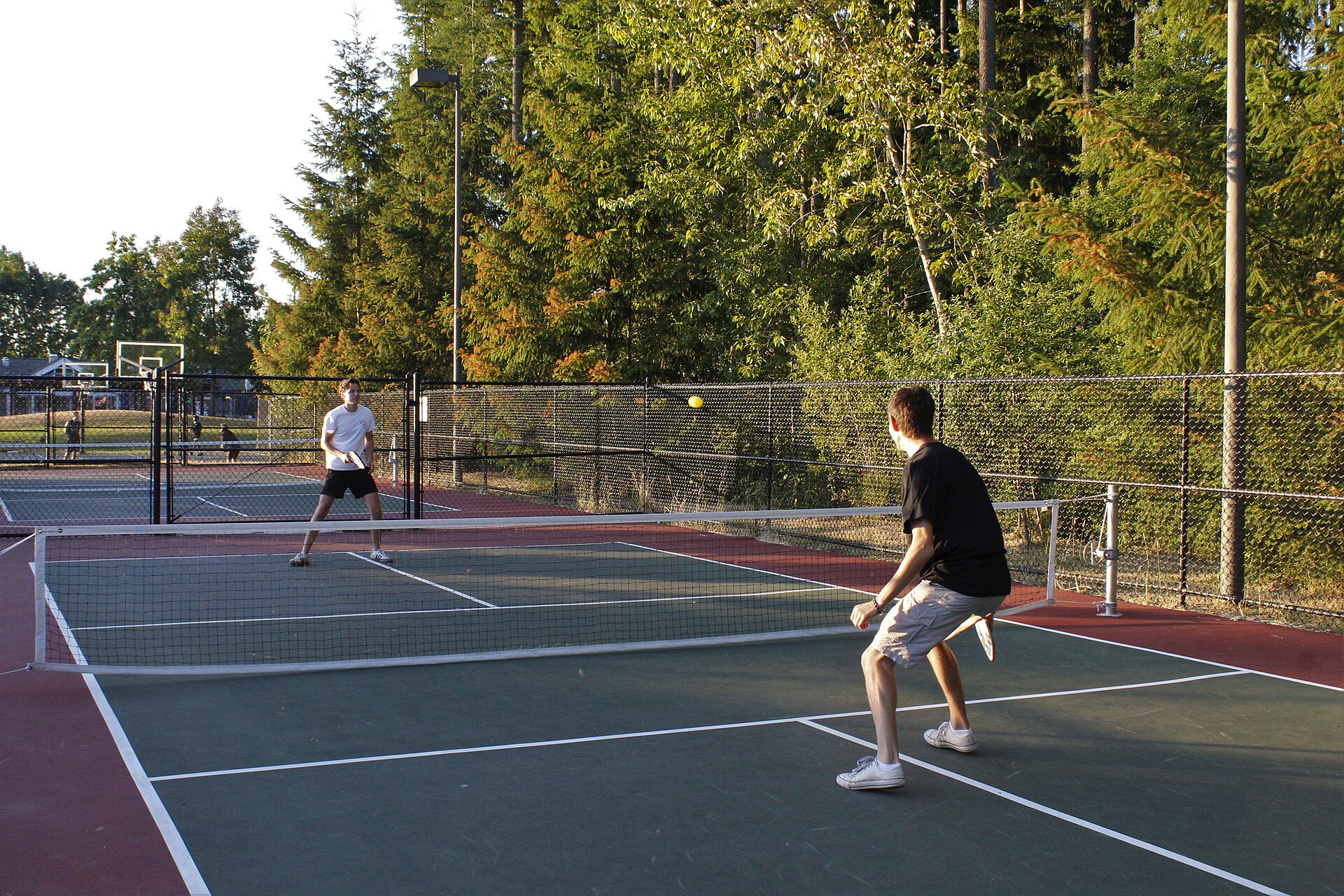
Mastering the Third Shot Drop: Step-by-Step Court Strategies

The third shot drop is the shot that gets the serving team from the baseline to the kitchen line. Because the returning team gets to move forward first, the serving team starts every rally at a disadvantage. A good drop takes that advantage away by landing softly in the kitchen, where the opponents cannot attack it.
Why the third shot matters
In doubles, the receiving team returns serve and walks up to the non-volley line. Now they are at the net and you are 40 feet away. If you drive the ball, they can volley it back at your feet. If you drop it into the kitchen, they have to let it bounce and hit up, which buys you time to move forward.
Step by step
- Get set early. Move to the ball and stop before you hit. A drop hit on the run is almost always too long or too high.
- Use a continental grip. The same grip you use for dinks and volleys lets the paddle face open slightly without a grip change.
- Swing low to high. Start the paddle below the ball and lift through it with your shoulder, not your wrist. Think of an underhand toss.
- Aim for the peak. The ball should reach its highest point on your side of the net, then fall into the kitchen. If it peaks over the net, it will float long.
- Follow through toward the target. Finish with the paddle pointing where you want the ball to land.
- Move up behind it. A drop only works if you follow it in. Take a few steps forward and split step as your opponent makes contact.
Common mistakes
- Too much wrist. Flicking the ball makes distance hard to control. Keep the wrist firm and let the arm do the work.
- Swinging too hard. The drop is a touch shot. A slow, smooth swing gives far more consistency.
- Standing still after the shot. Admiring a good drop from the baseline wastes it.
- Only ever dropping. Mix in the occasional drive so opponents cannot cheat forward.
A simple drill
Stand at the baseline with a partner at the kitchen line. Your partner feeds a medium-paced ball; you hit a drop and move two steps forward. Your partner feeds again and you drop again from the new spot. Keep going until you reach the kitchen. Ten rounds of this, three times a week, builds the feel faster than match play alone.
Does your paddle matter?
A softer, thicker paddle makes drops more forgiving because the ball stays on the face a little longer. If your drops keep sailing long, a control-oriented paddle can help. See our paddle shortlist, and check the current promo codes before you buy.